Charleston Beer & Liquor Bottles
Ben Baer
1888—1909
Ben Baer was likely the second liquor wholesaler and bottler in Charleston (the first being Samuel S. Strauss, lower down on this page). He first appears as a liquor wholesaler in 1888 (Mercantile Agency, 1888).
In the 1898-1899 Polk West Virginia Gazetteer, Ben Baer was listed as being located at 258 Kanawha Street and his brother Isaac (Ike) at 28 Capitol Street, though Isaac sold meats at this time. Ben and Isaac Baer both operated out of the same building at 622 Kanawha Street by 1905—Ben being a liquor wholesaler and Isaac being a saloon (R.L. Polk & Co., 1905).
In 1909, Ben Baer & Bro., the brother at this point being David Baer, were wholesale liquor dealers (R.L. Polk & Co., 1909). One of the bottles bearing the Ben Baer & Bro. name is below. This is the final year that Ben Baer was in the business.

Dark amber Ben Baer. Monogrammed export-style pint. Baltimore-loop.

Ben Baer, Charleston etched whiskey flask.
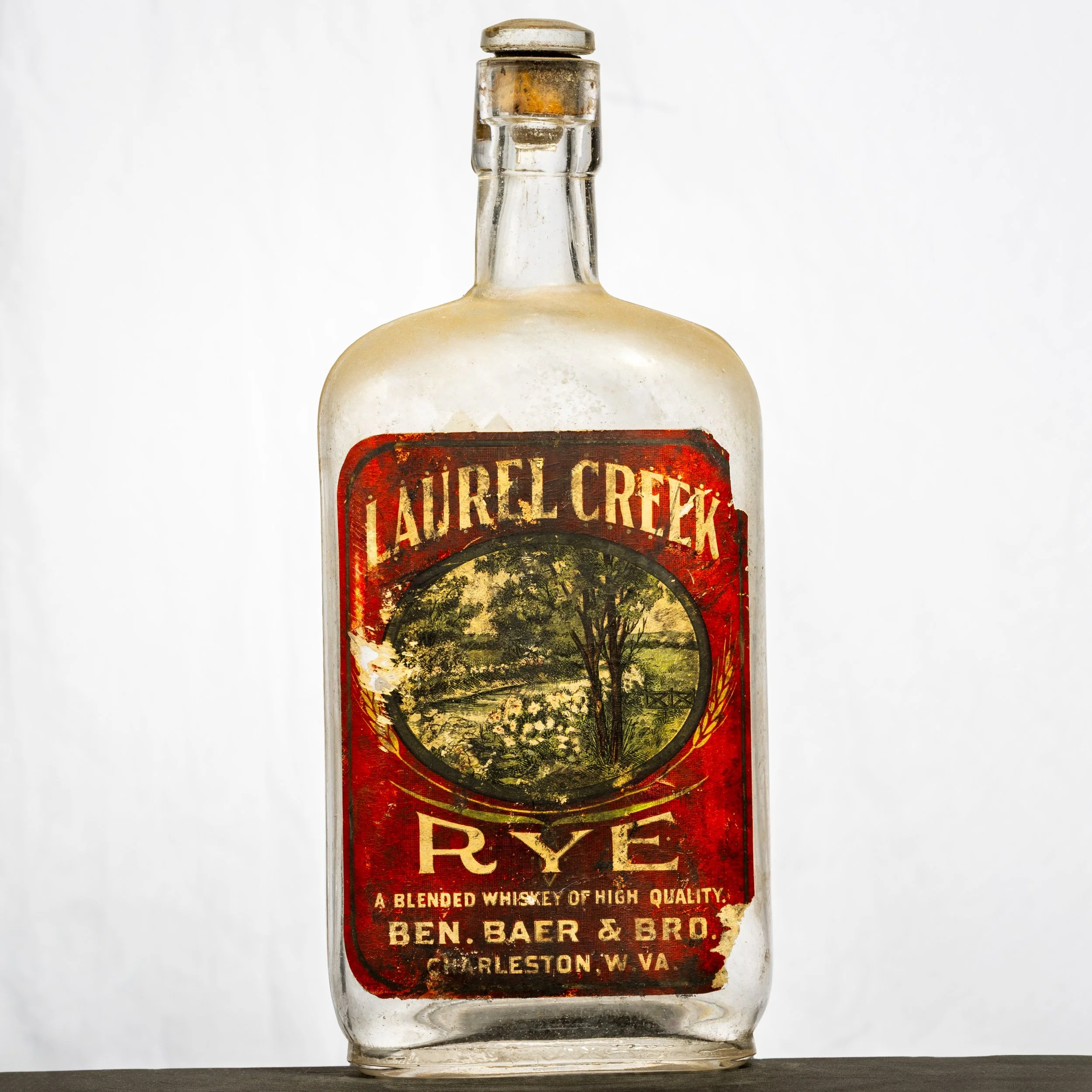
Ben Baer & Bro., Laurel Creek Rye Whiskey, Charleston labeled whiskey bottle. Pint-sized.

Ben Baer, Charleston acid-etched shot glass.
Isaac “Ike” Baer
1901—1908
Isaac “Ike” Baer began his time as a business man selling meats at 28 Capitol Street (R.L. Polk & Co., 1898). He then ran a saloon starting in 1901 (Mercantile Agency, Jul. 1901) located first at 258 Kanawha Street (R.L. Polk & Co., 1903), then later at 622 Kanawha Street (R.L. Polk & Co., 1905). His last year in business was 1908.

Ike Baer, Canada Malt Rye Whiskey, Charleston paper label whiskey bottle. Front.

Distillery from Paris, KY embossed on the back.
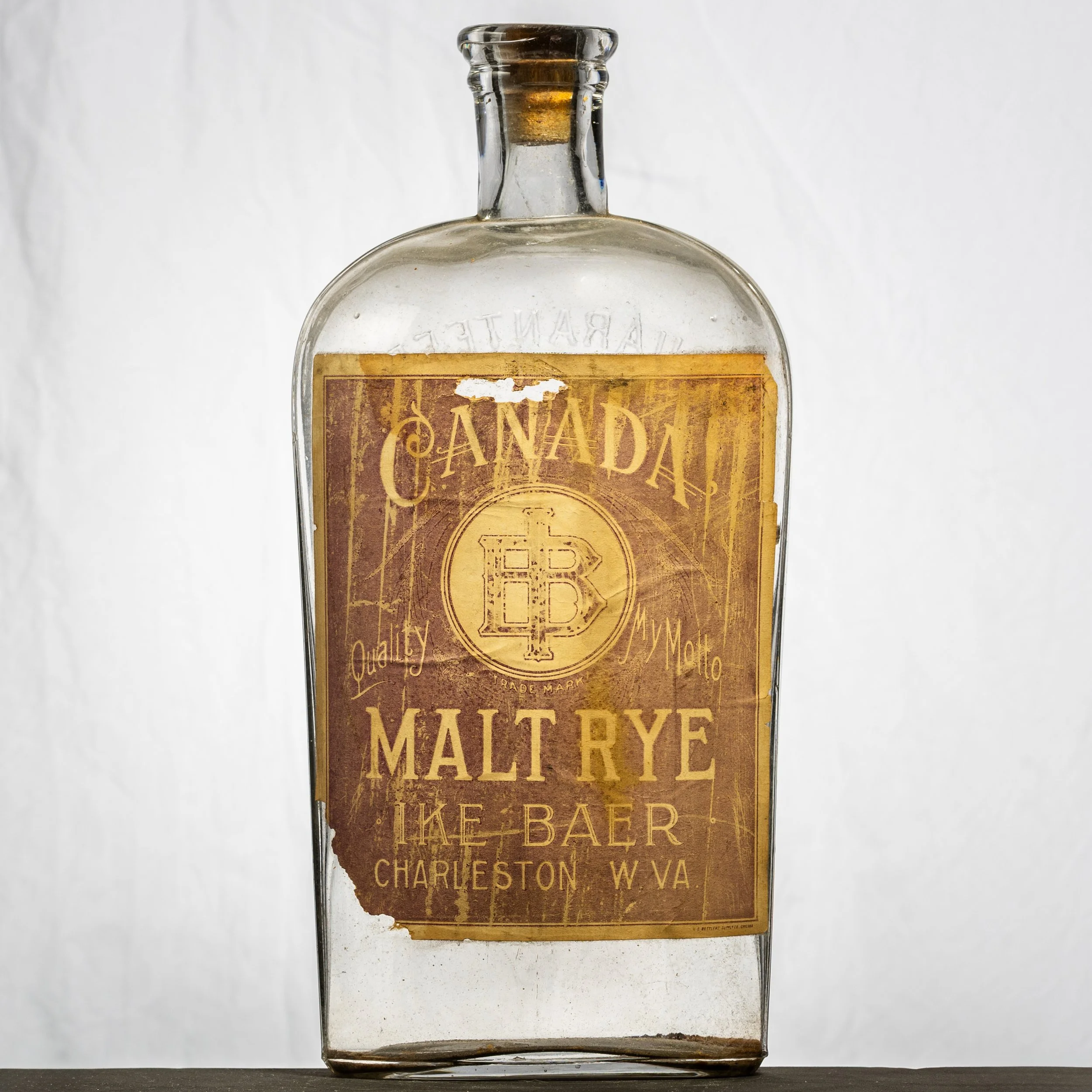
Ike Baer, Canada Malt Rye Whiskey, Charleston paper label whiskey bottle. Different bottle mold, same whiskey.
The Capital Carbonating Co.
1901—1905
The Capital Carbonating Company also bottled beer at one time. The only known variant is this tall, aqua blue quart. Based off Dun & Bradstreet records, the Capital Carbonating Co. was established by 1901 and ended sometime in 1905. The bottler was written as Capital and Capitol, so I am unsure as to which is correct, but it is Capital in later listings. The 1905 West Virginia Gazetteer and Business Directory places Capitol Carbonating Co. on “East End Capitol,” which I am supposing just means the eastern end of Capitol Street, not the East End of Charleston. It also notes that J.U. Graham was the manager of the firm.

Aqua blue C.C.Co. Champagne-style neck, blob top. Quart.
Charles Capito
1872—1906
Charles Capito switched his professional focus several times, but he did not personally start bottling beer until the 1900s. The earliest records show him as a grocer and wholesale liquor dealer (Mercantile Agency, 1872; J.S. Sheppard & Co., 1875), though he is listed as only a grocer on Kanawha Street in the early 1880s (now Kanawha Boulevard; R.L. Polk & Co., 1883).
By 1898, he was at 304 Kanawha Street (R.L. Polk & Co., 1898), which I am assuming was the same spot. He continued in this location into the 1900s (R.L. Polk & Co., 1903), though his bottling works was located at 136 Kanawha Street. However, in 1901, a different directory lists his business at the corner of Smith and Brooks Streets (R.L. Polk & Co., 1901).
Around this time he was no longer a grocer, instead both a wholesale liquor dealer and beer bottler. In 1905, both his store and bottling plant changed locations to 812 Kanawha Street and 220 Kanawha Street, respectively (R.L. Polk & Co., 1905).
Both Dun & Bradstreet and city directories stop listing him in 1906, so I presume his business ends here. Though evidently, Capito was later the president of the Kanawha National Bank (Kanawha National Bank, 1910). I can only presume this is the same person, but I do not have a direct connection.

Chas. Capito, bottler. Amber. Export neck. Baltimore-loop seal. Pint.
Charleston Brewing Co.
1905—1907
The first appearance of Charleston Brewing Co. is in the September 1905 Dun & Bradstreet. The 1907 Charleston city directory (R.L. Polk & Co.) lists their location as Bullitt Street near the Kanawha & Michigan Railroad. Additionally, W.D. Johnston served as their president and William F. Sharbaugh was the secretary-treasurer.
A December 1906 article about the brewery reveals that Charleston Brewing Company’s manager was originally W.F. Sharbaugh and the brewmaster, C. Graebner, was a brewer from Germany with twenty-five years of experience (“Big Enterprise,” 1906). Despite apparently having quite impressive facilities, the brewery survived just a little over a single year.
A Charleston Brewing Company appears in 1874-1875 city directory of Charleston (J.S. Sheppard & Co., 1875), but I presume this was likely the business of S.S. Strauss, though I do not have direct evidence of that aside from the earliest known Charleston beer bottle bearing his name. There may be a missing bottle from this original company.

Honey amber Charleston Brewing Company crown top. BIMAL. Export-style neck. Pint.

Honey amber Charleston Brewing Co. "T-Top" closure, export-style neck. Pint.
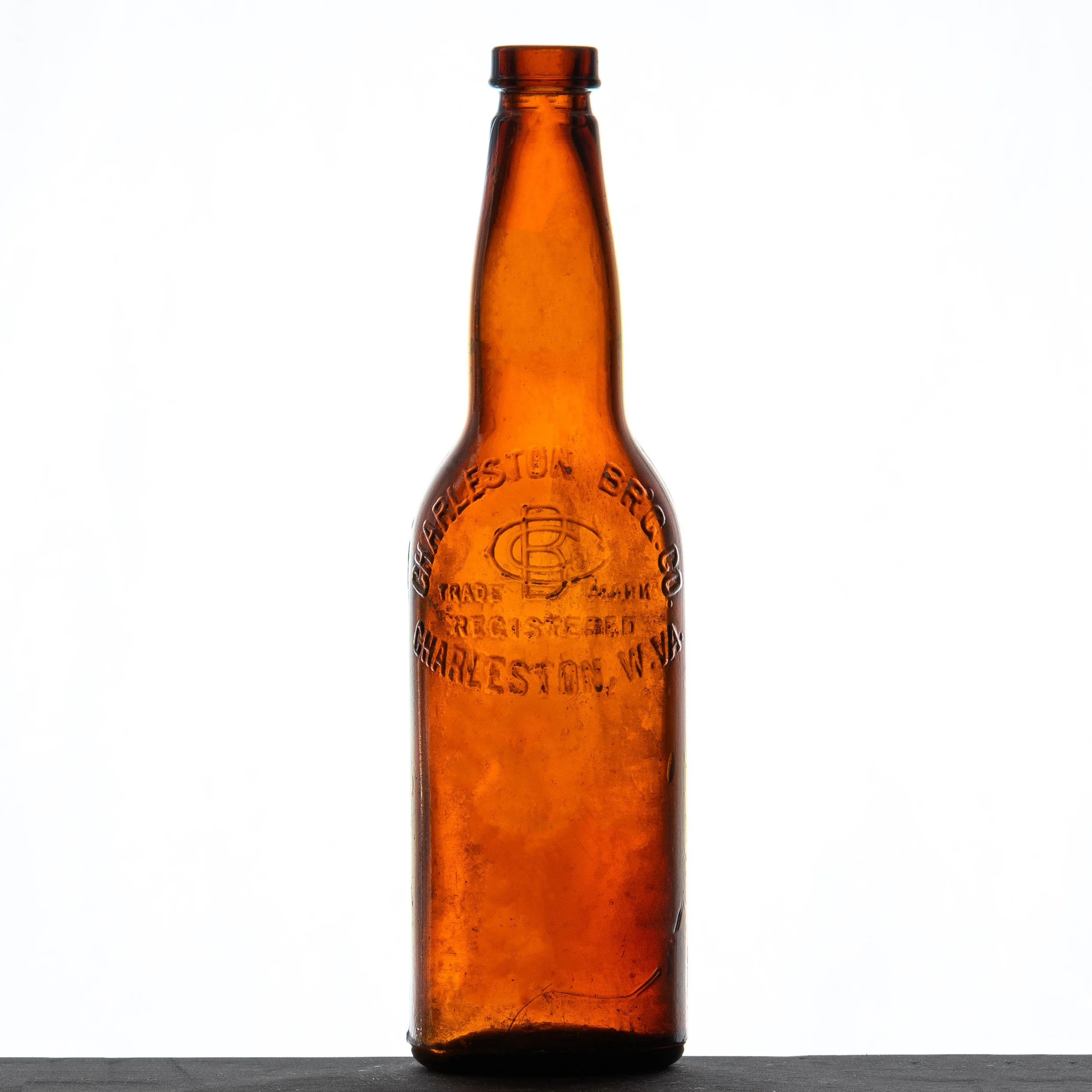
Amber Charleston Brewing Co. "T-Top" closure, export-style neck. Pint.
Charleston Liquor Co.
1903—1909
The Charleston Liquor Co. first appears in the 1903 Dun & Bradstreet listings. The 1905 Charleston city directory places them at 810 Kanawha Street, with Albert P. Tiers as manager. As of 1909, the officers of the company included C. William Welty, President, and Frederick H. Hanke, Secretary and Treasurer (R.L. Polk & Co., 1909). 1909 was the final year of operation for Charleston Liquor Co., possibly due to one of the officers of the company being indicted on bribing a councilman to resign their seat (“Liquor Men”, 1910).
Pictured is a paper label bottle for Welty’s whiskey, originally of Wheeling.

Charleston Liquor Co., Welty's Pure Old Rye flask. Paper label.
James P. Clark
1904—1912
James P. Clark ran a saloon that doubled as a wholesale liquor outlet. In 1901 to 1909, the saloon was located at 24-26 Capitol Street, and the liquor store was at 26 Capitol Street (R.L. Polk & Co., 1901, 1909). In 1904, he became a liquor retailer and wholesaler (Mercantile Agency, July 1904).
He was in business in Charleston up until 1912, advertising deals for couponds brought to his storefront at 24-26 Summers Street (J.P. Clark, 1912). It seems that after statewide prohibition began, Clark moved to Maysville, Kentucky to sell whiskey, as a news article recounts a man who was fined for drinking whiskey he purchased from Clark from Maysville (“In Police,” 1914).
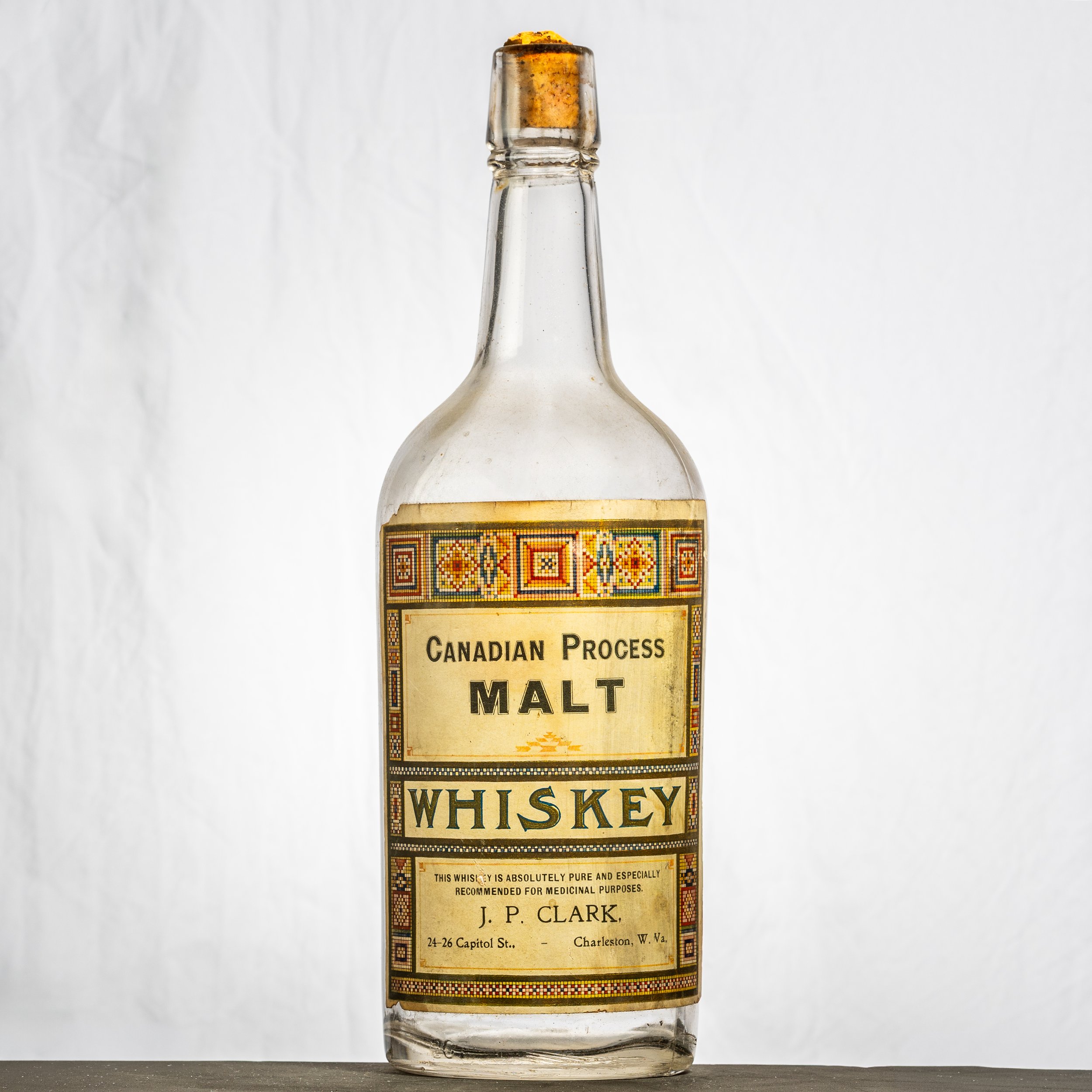
J.P. Clark, Canadian Process Malt Whiskey, Charleston quart whiskey bottle.
Crystal Bottling Co.
See “Crystal Bottling Company,” Charleston Sodas

Crystal Bottling Co. Light aqua green. Blob top. Champagne neck. Pint.
Dilcher & Ripley
1899—1901
Henry Dilcher Jr. was a beer bottler in Charleston until 1901, located at the northwest corner of Smith and Brooks Streets (R.L. Polk & Co., 1901). I cannot find anything on his partnership with an individual named Ripley, unfortunately.

Dilcher & Ripley, Charleston beer bottle. Amber, Baltimore-loop seal, export-style neck, pint.
Greenlee & Harmon
1901—1914
Greenlee & Harmon was a saloon run by William J. Greenlee and Wirt B. Harmon (R.L. Polk & Co., 1901, 1909). At its opening in 1901, it was located at 28 Capitol Street (R.L. Polk & Co., 1901). By 1909, the saloon was located at 20 Summers Street, corroborated by a bottle with a paper label reading the same. Sometime later, but by 1911, the company had moved to 705-707 Virginia Street and additionally offered a lunch room (Greenlee & Harmon, 1911). The duo operated their saloon and whiskey-selling business until statewide prohibition (Mercantile Agency, Jan. 1914).
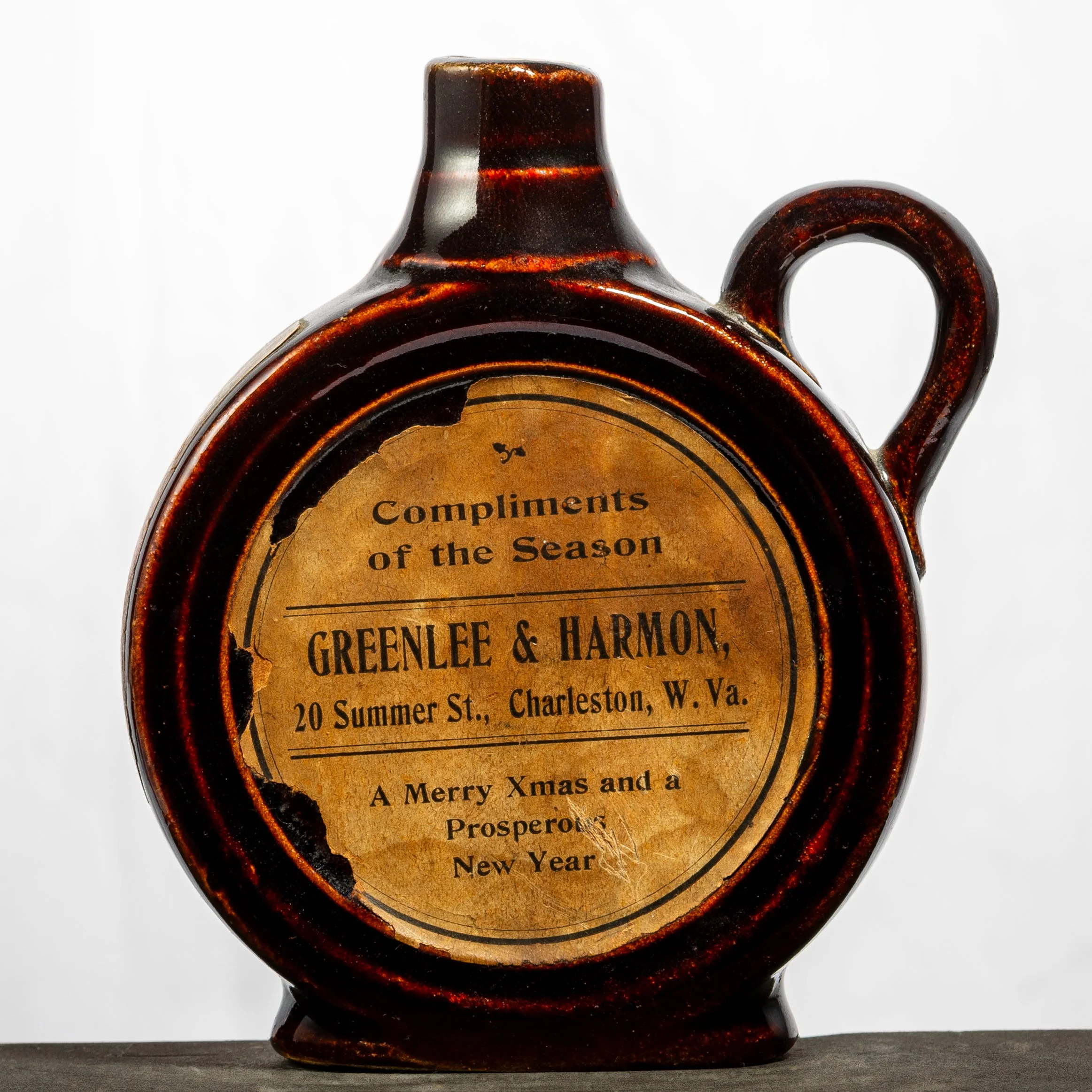
Greenlee & Harmon, Bare Old Perfect Brookfield Rye, Charleston stoneware whiskey bottle. Roughly half-pint size, handled. Front.
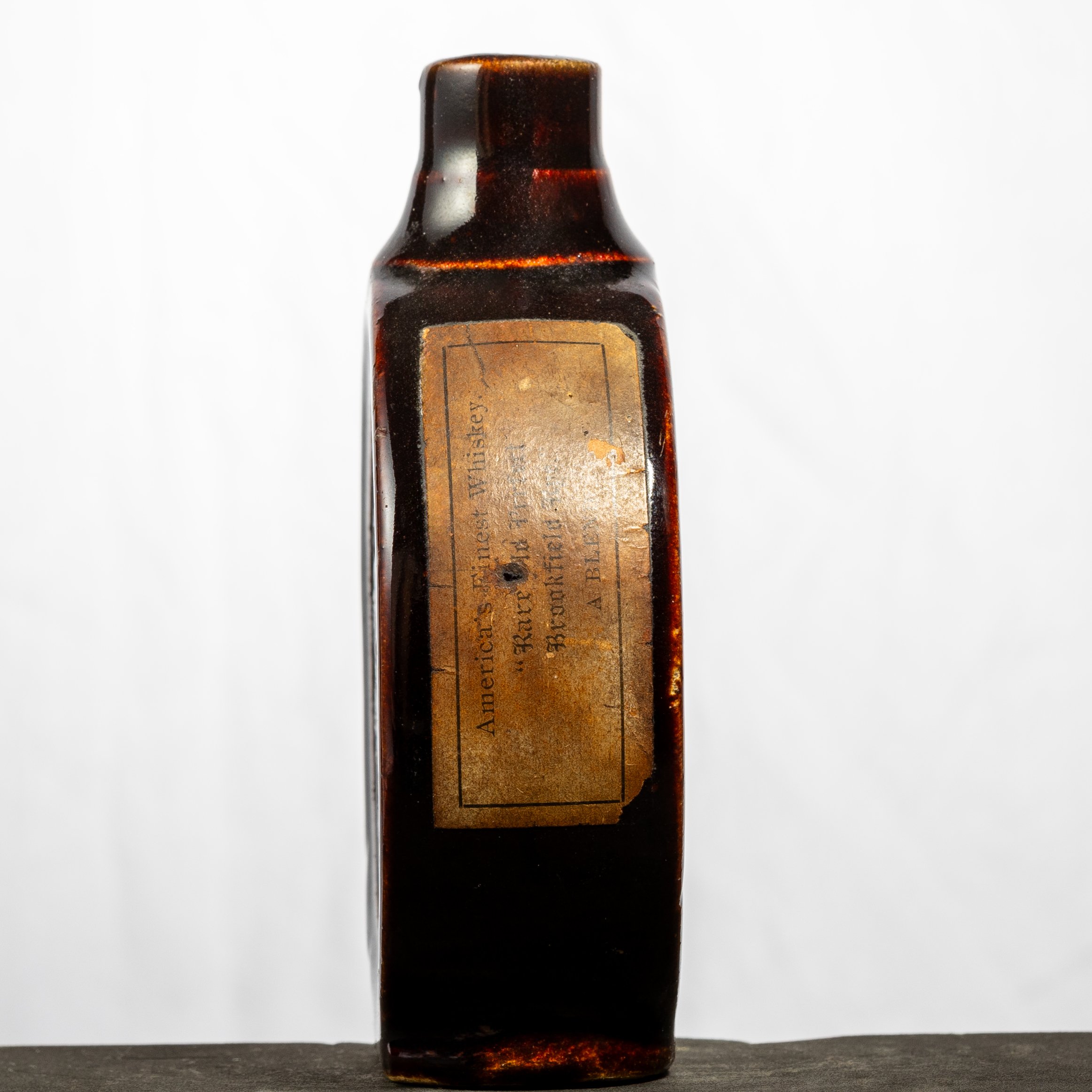
Side.
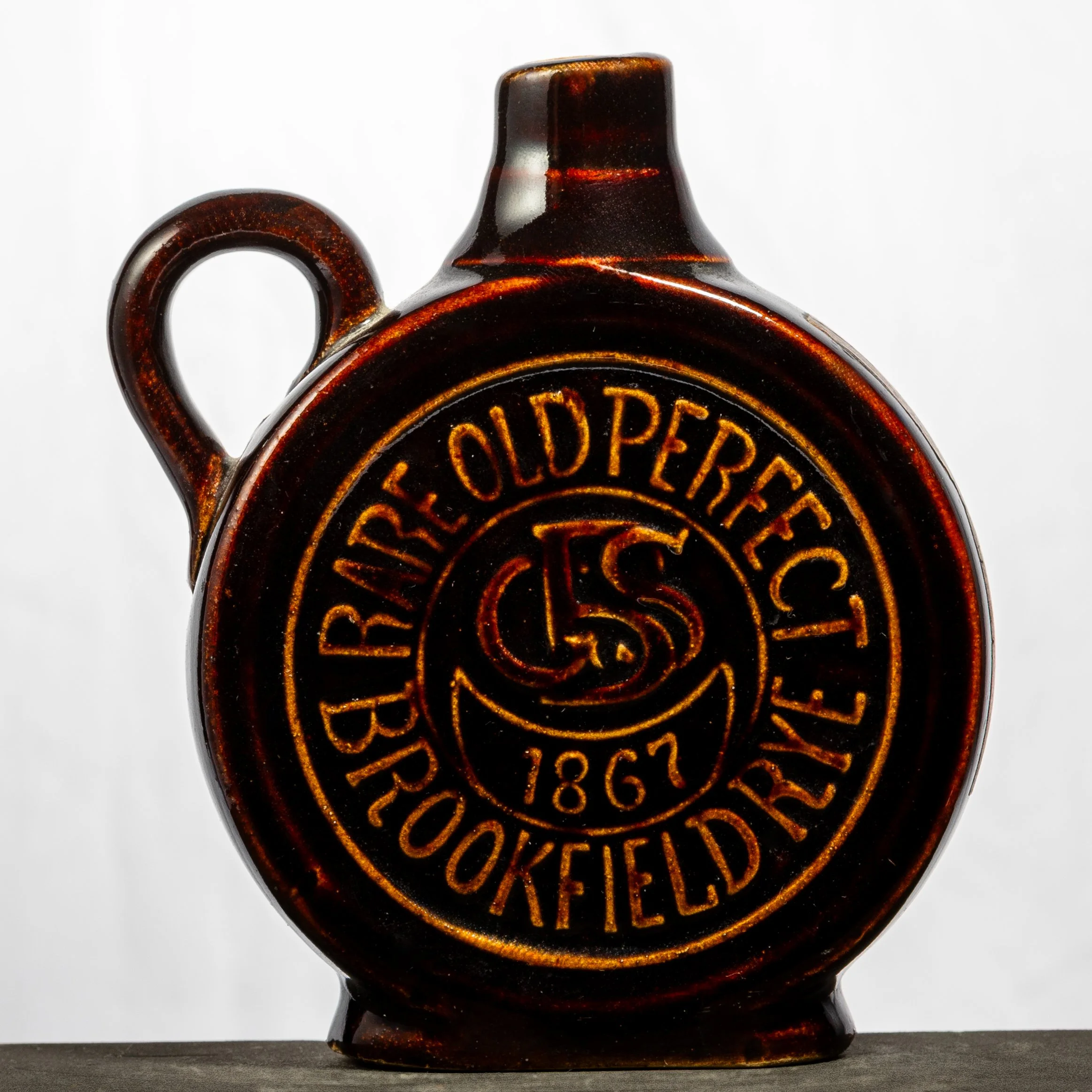
Reverse.
S.B. Jarrett
1911—1914
In 1911, upon first receiving his liquor license, he was located at 507 Kanawha Street (“30 Retail,” 1911). It seems that, despite not much media mention, he operated quietely up until prohibition (Mercantile Agency, Jan. 1914).
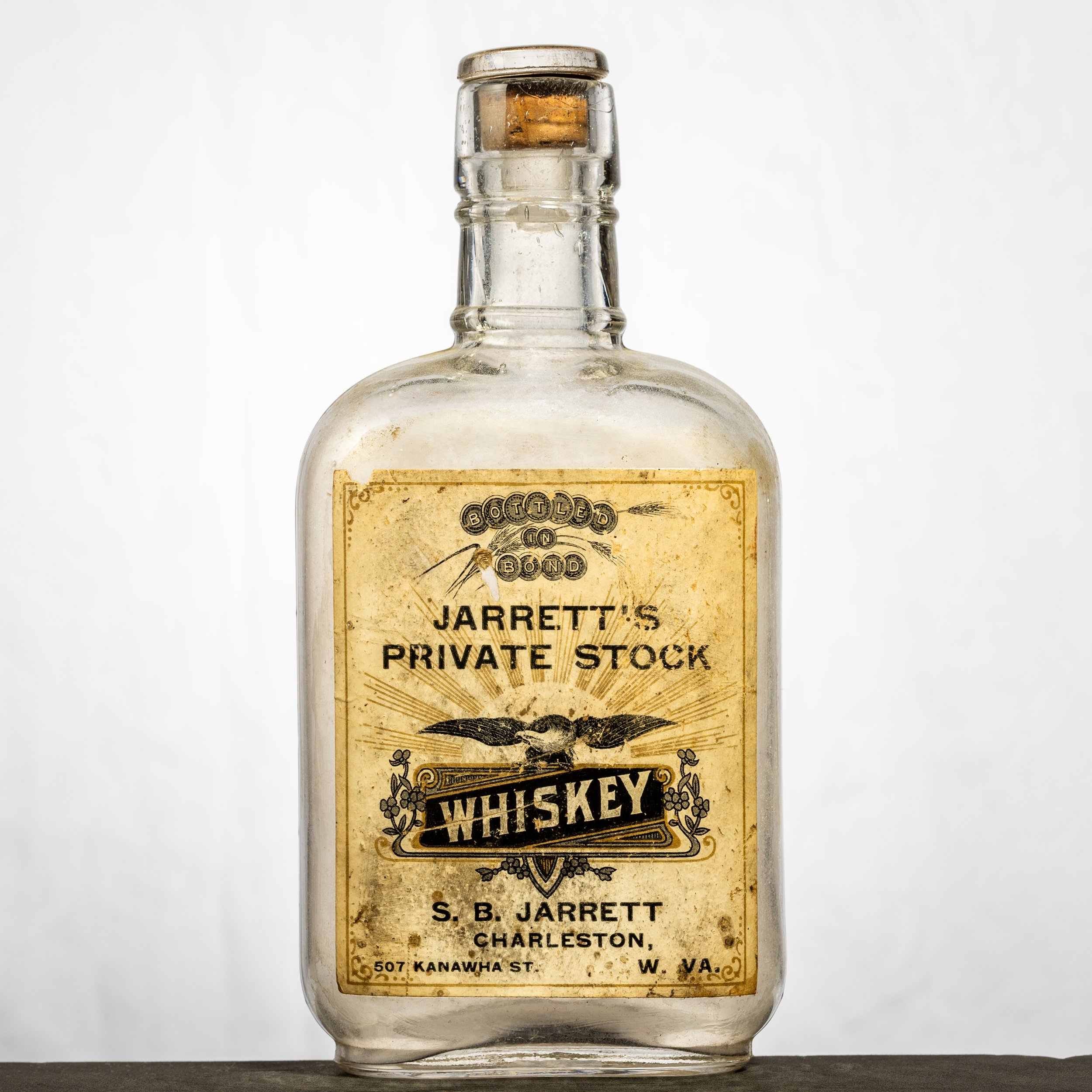
S.B. Jarrett, Jarrett's Private Stock Whiskey, Charleston labeled whiskey bottle. Half-pint, eagle flask.
Kanawha Brewing Co.
1907—1914
The first year that Kanawha Brewing Co. appears in Dun & Bradstreet is 1907. According to advertisements, their beers had various branding, including “Kanawha Chief” (Kanawha Brewing Co., 1907) and “Cream of Rain.” This likely would have been printed on a paper label for these bottles. Between at least 1909 to 1911, the manager of the company was J. Fred Englert (R.L. Polk & Co., 1909; “30 Retail… Licenses", 1911). In 1909, the company was located at the corner of Bullitt Street and the K. & M. Railroad—the original building of Charleston Brewing Company.
By the September 1914 issue of Dun & Bradstreet, Kanawha Brewing Company disappears due to prohibition being enacted in West Virginia that year.

Kanawha Brewing Co. Light amber. BIMAL. Champagne neck. Pint.

Kanawha Brewing Co. Medium amber. BIMAL. Champagne neck. Pint.

Kanawha Brewing Co. Dark amber. BIMAL. Champagne neck. Pint.

Kanawha Brewing Co. Circle slug plate. Misspelled "Charleston." BIMAL. Champagne neck. Pint.
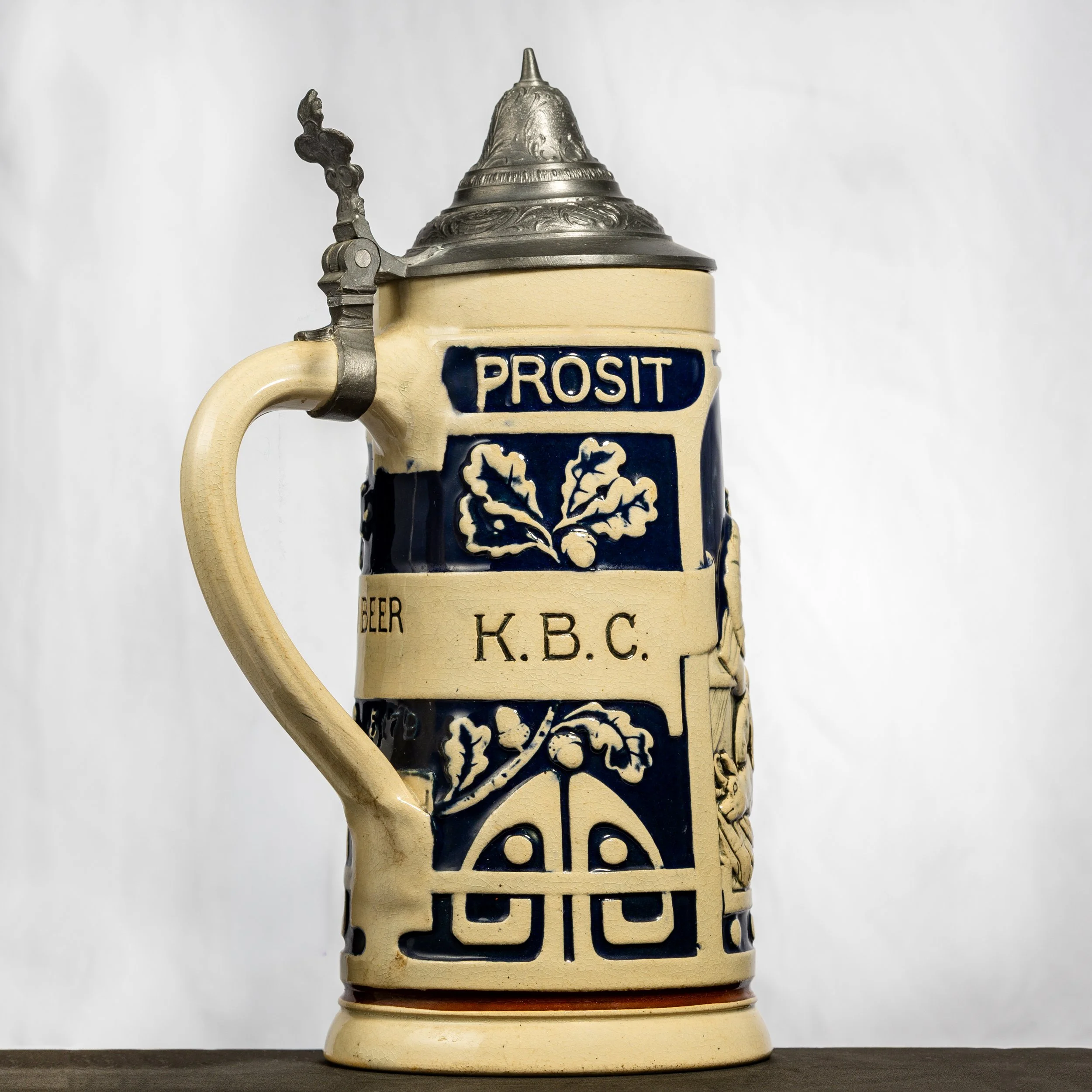
Left.
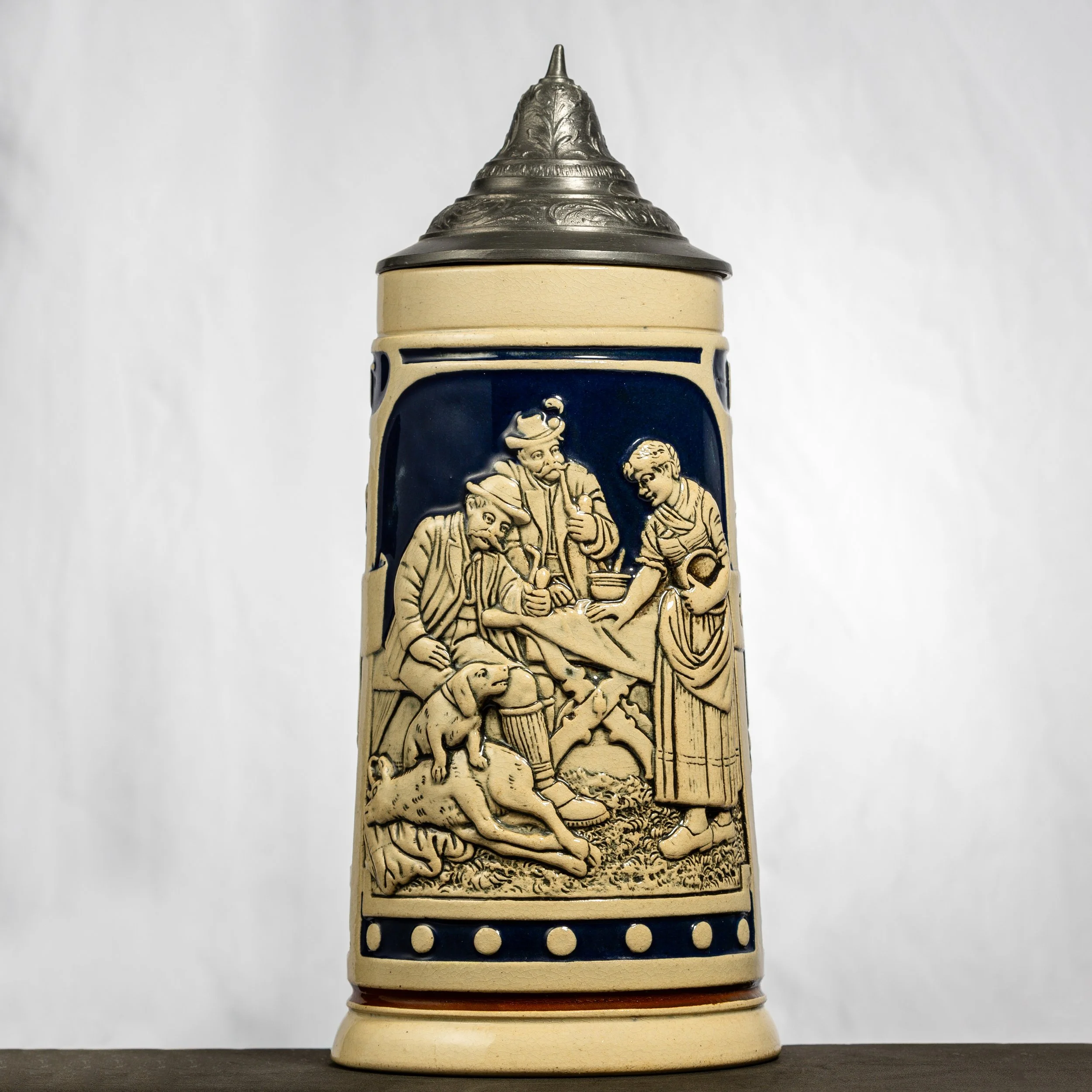
Kanawha Brewing Co., Charleston stein. "Prosit" is a toast to one's health. Front.
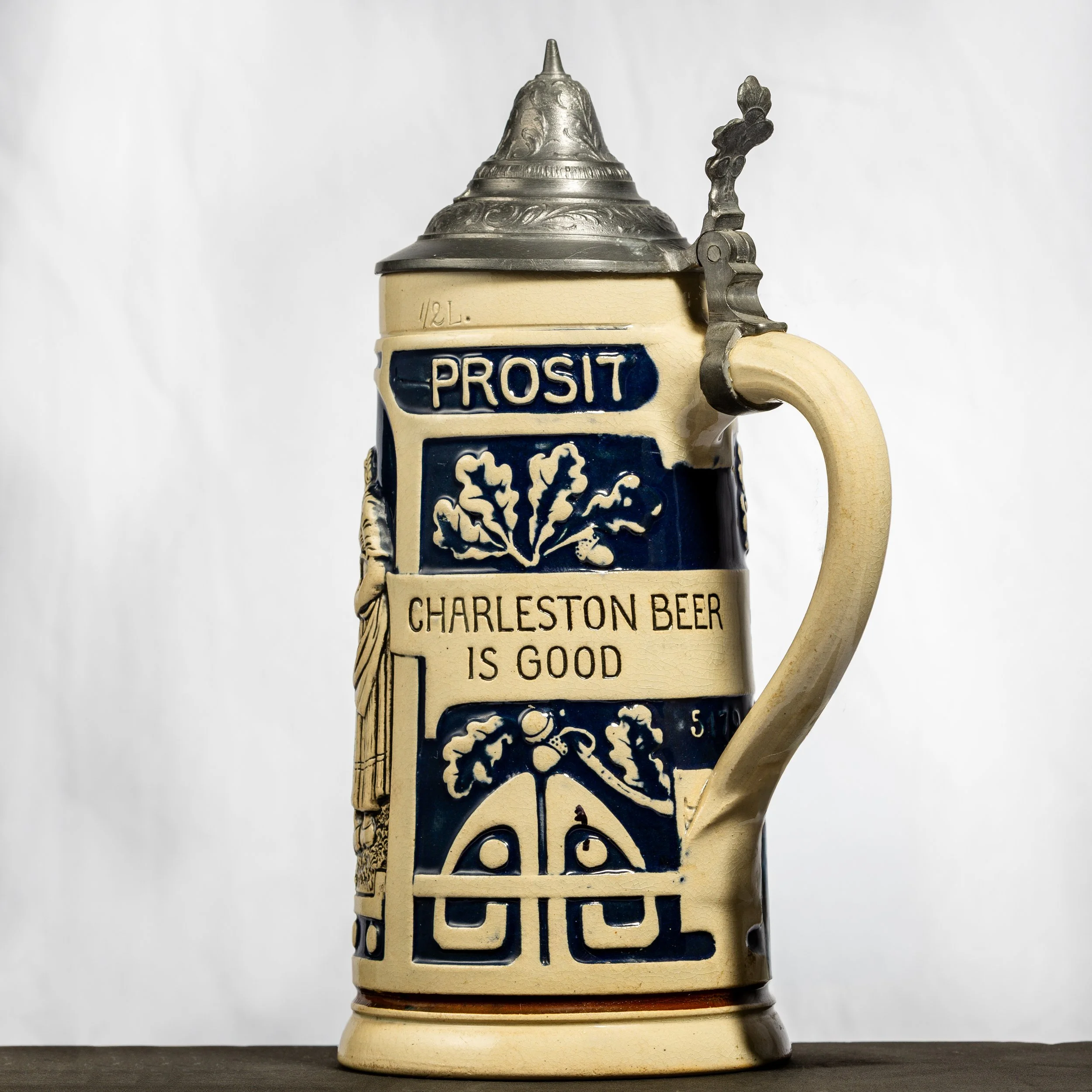
Right.
Kanawha Distilling Co.
1904—1909
The Kanawha Distilling Co. first appears in the March 1904 issue of Dun & Bradstreet. Strangely, it does not appear in the 1905 West Virginia Gazetteer and Business Directory, but the 1907 Charleston city directory does list them. It was located at 104-106 Capitol Street, owned by M. Goldbarth.

Kanawha Distilling Co., Charleston flask. Embossed, rectangular, flared finish.

Kanawha Distilling Co., Charleston flask. Labeled Full Stock Rye. Embossed on reverse, rectangular, flared finish.
J.H. Mendel
1904—1908
Joseph H. Mendel’s first appearance in directories was in 1904 (Mercantile Agency, Sep. 1904). He was the owner his saloon and the Family Liquor Store, both at 101 Capitol Street (R.L. Polk & Co., 1909). There are no further mentions of Mendel in general media, but Dun & Bradstreet suggests that he continued in the business until 1908 (Mercantile Agency, July 1908).
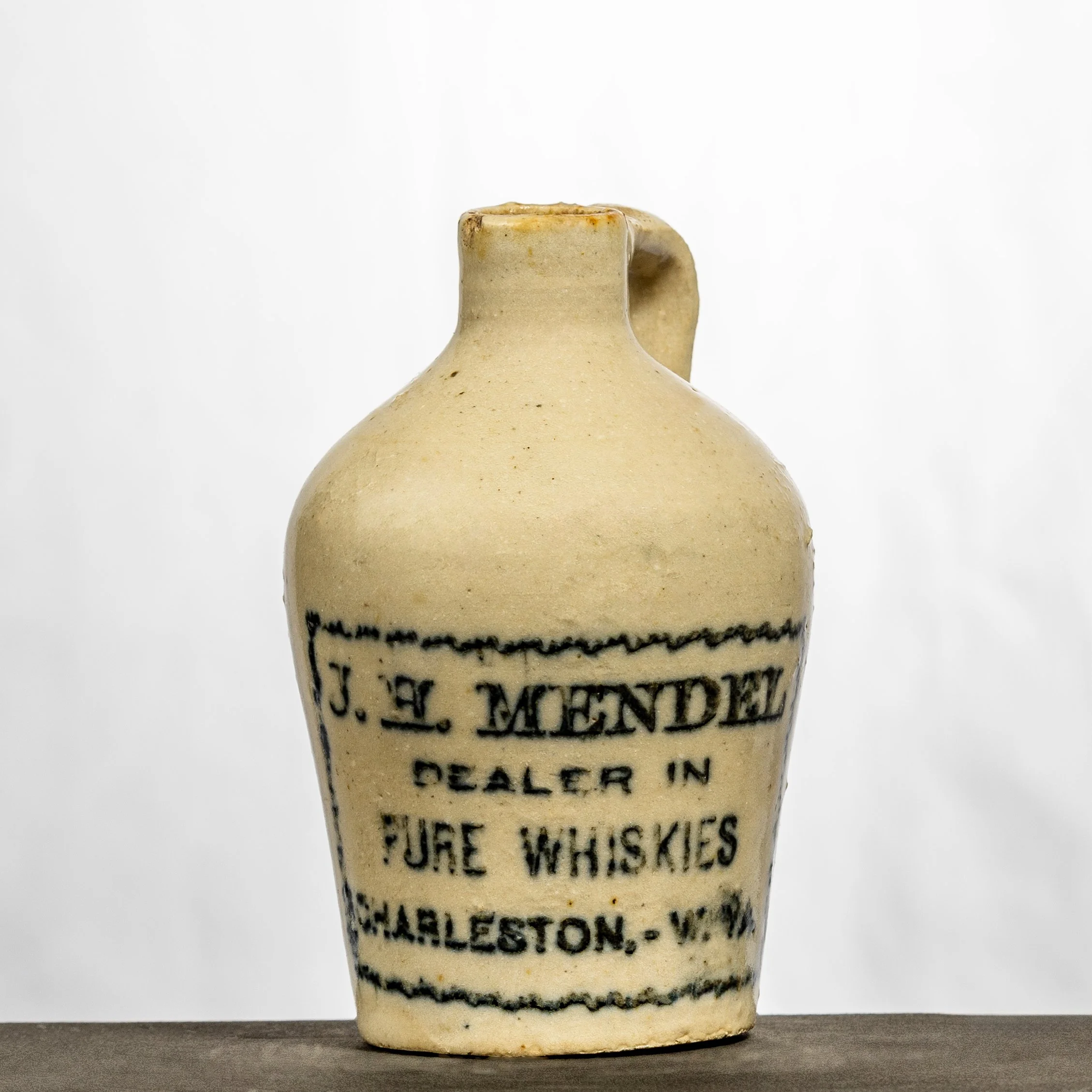
J.H. Mendel, Charleston mini stoneware whiskey jug.
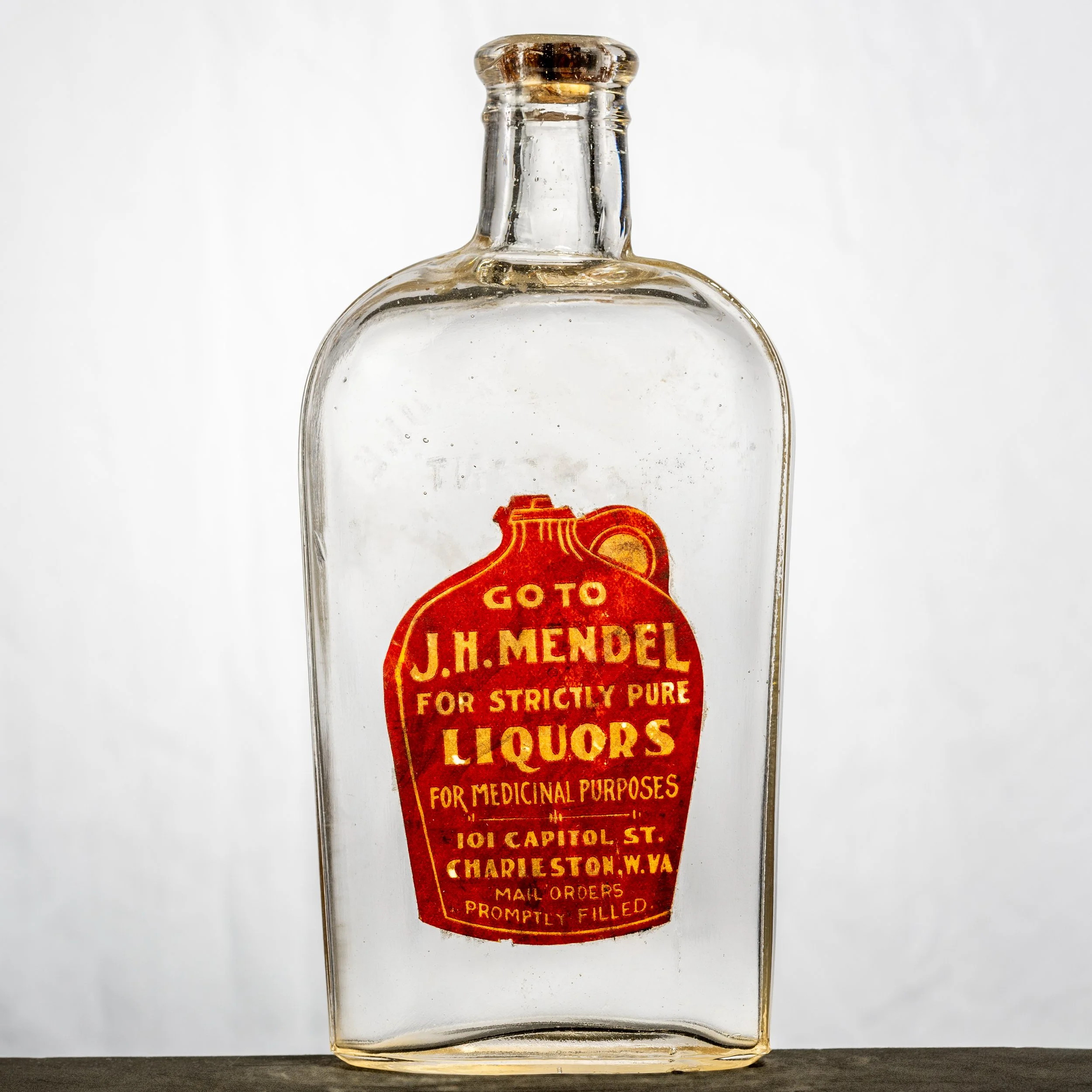
J.H. Mendel, Charleston labeled whiskey bottle. Label is shaped like a jug, noting their liquor is "for medicinal purposes," which was a legal loophole.
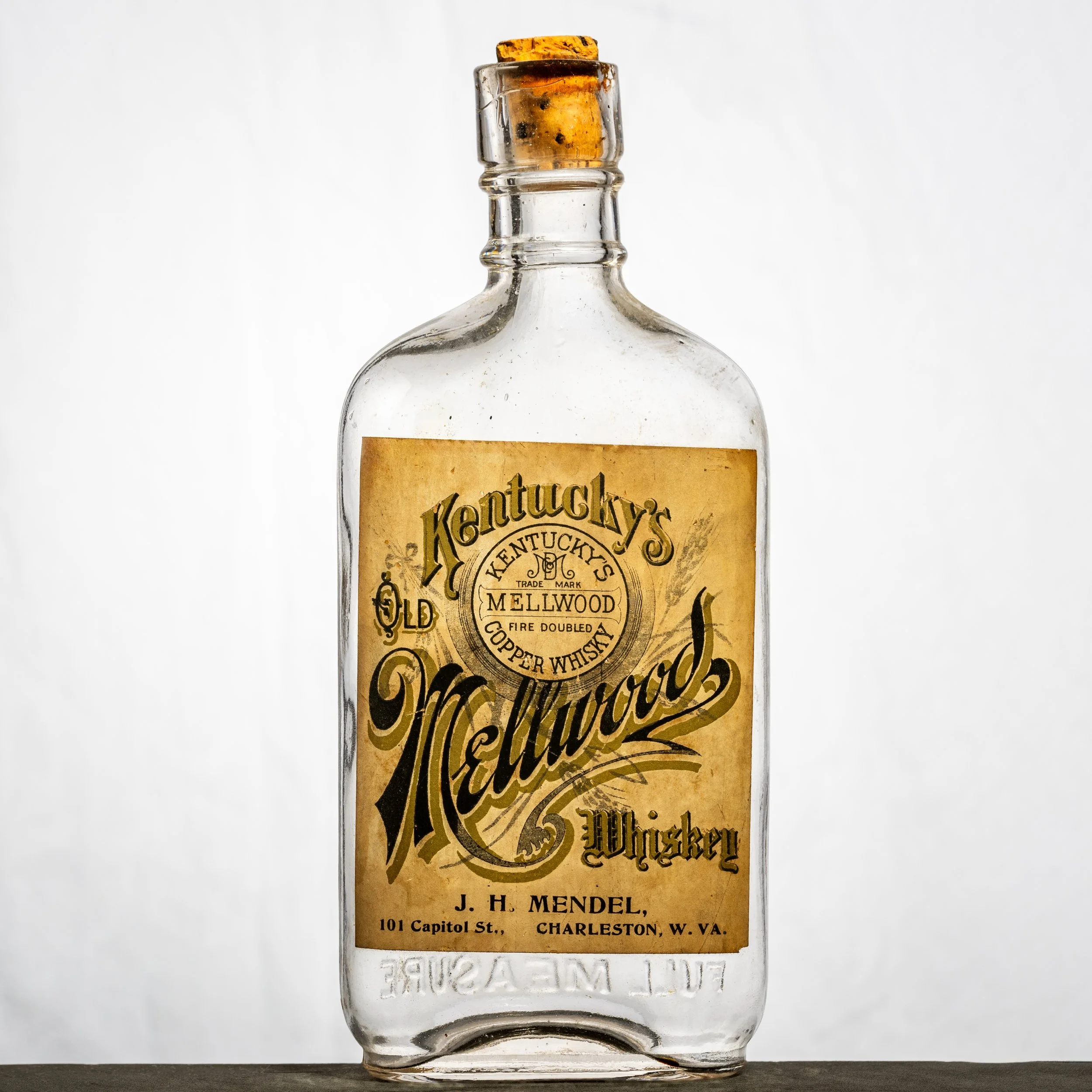
J.H. Mendel, Kentucky's Mellwood Whiskey, Charleston labeled whiskey bottle.
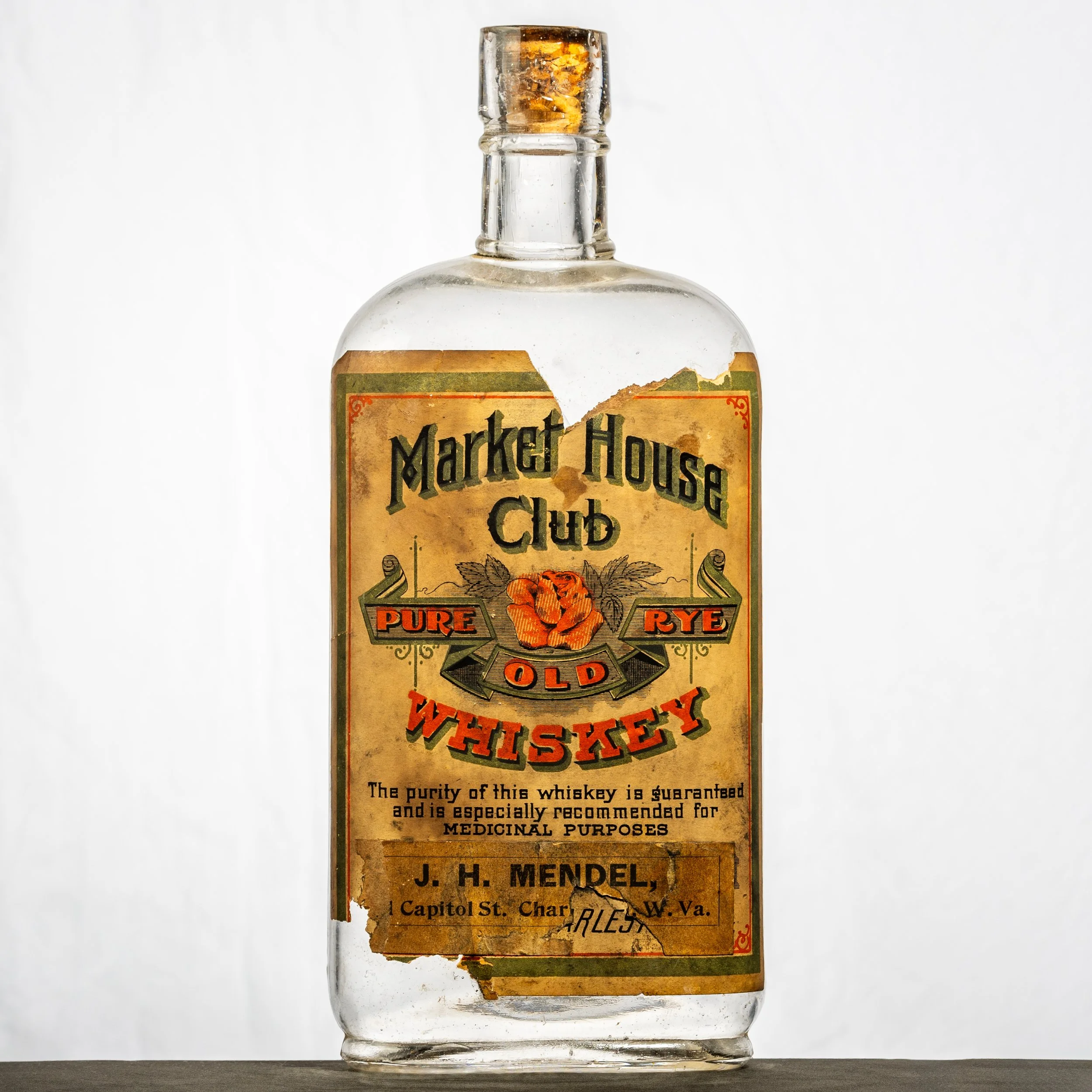
J.H. Mendel, Market House Club Pure Old Rye Whiskey, Charleston labeled whiskey bottle.
I. Adler Rosenheim
1900—1914
I.A. Rosenheim first appeared in the 1900 Dun & Bradstreet as a branch of Parkersburg (Mercantile Agency, 1900). In 1901, he was a liquor dealer located at 33 Capitol Street (R.L. Polk & Co., 1901). Later, in 1909, the I.A. Rosenheim & Bro. saloon was located at the corner of Summers and Virginia Streets (R.L. Polk & Co., 1909). I.A. and D.F. Rosenheim were granted a liquor license to sell spirits in 1911, still at their former location (“30 Retail”, 1911). The business closed when prohibition took effect in 1914.

A Charleston mini-jug from I.A. Rosenheim that once held a sample of River Mills Rye whiskey.
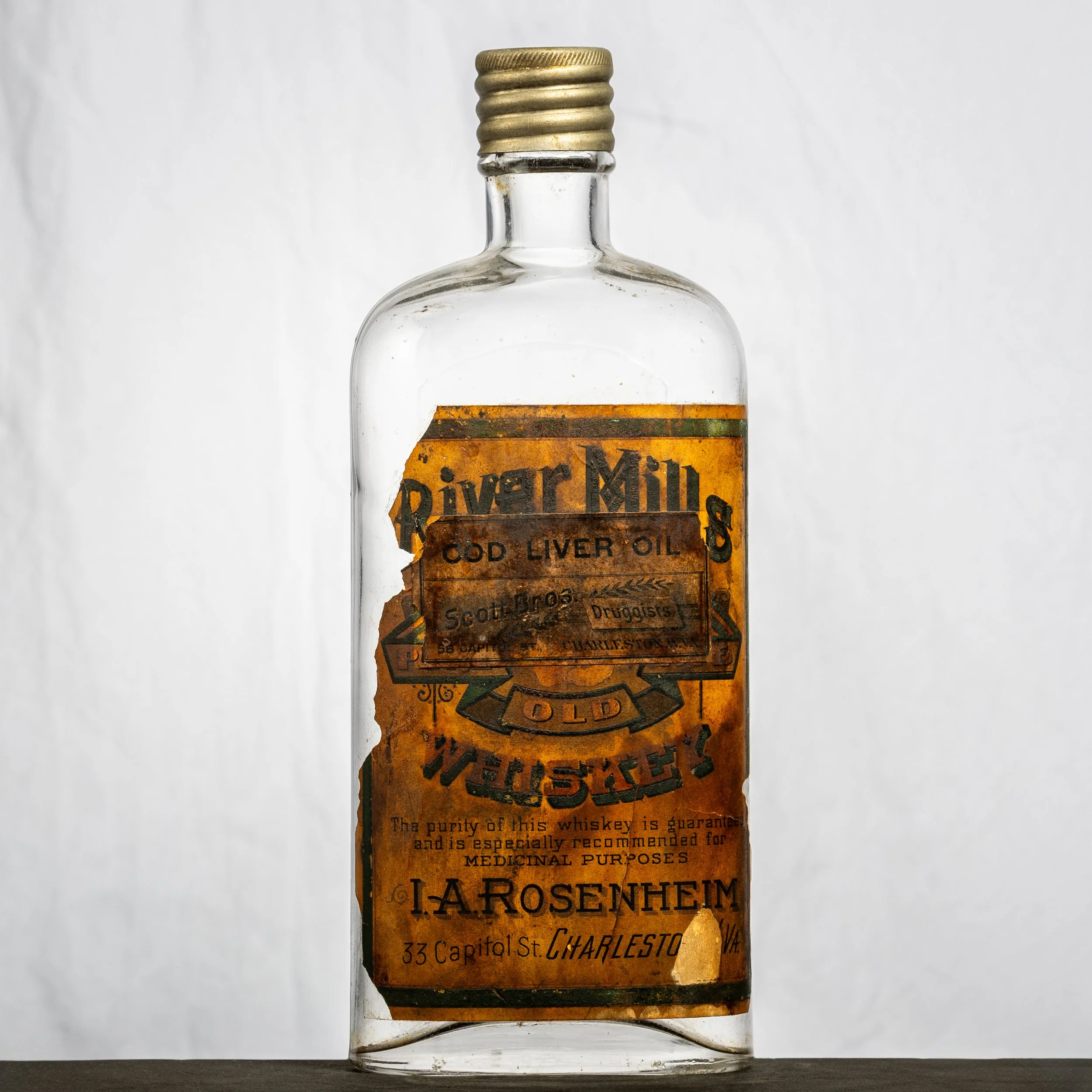
I.A. Rosenheim, River Mills Whiskey, Charleston labeled whiskey bottle. Has an over-stamped label from the Scott Bros. drug store for cod liver oil.
Samuel S. Strauss & Co.
1875—1880s
Samuel S. Strauss was by far the first beer bottler in Charleston, being the only one in the business for about a decade before Ben Baer began doing so.
According to advertisements from the last 1860s, Samuel S. Strauss was originally a dealer of dry goods and groceries with his brother, Isaac Strauss, under the business name of Strauss & Bro. (Tompkins & Maden, 1866). The two dissolved their business in July of 1866 with Samuel continuing in business at the same property (“Notice,” 1866). At this time he was at a property on Front Street (now, Kanawha Boulevard). By 1869, he had moved to a lot in the St. Albert Hotel (S. Strauss, 1869), though I cannot determine a location for this hotel.
The first year that Samuel Strauss sold liquor was in 1875, as evidenced by his Dun & Bradstreet listing for September (Mercantile Agency, 1875;). This remained true through the 1880s, dealing under the name S.S. Strauss & Co. while on Summers Street (R.L. Polk & Co., 1883) between Virginia Street and the Kanawha Boulevard (Sheppard, 1883). In fact, I cannot find a reference to them being beer bottlers at any point. I imagine it was a very short-lived operation.

S. Strauss, Charleston very early, crude blob beer bottle. Dark amber w/ an export-style neck.
West’s Bottling Works
1898—1909
Charles E. West was a bottler of beer by 1898, at which point he was located at 73-1/2 Summers Street (R.L. Polk & Co., 1898). The 1905 West Virginia Gazetteer and Business Directory then places him as a beer bottler at the corner of Brooks and Smith Streets. He last appears as a bottler in 1909 (Mercantile Agency, 1909), then working as an agent for the George Wiedemann Brewing Company (R.L. Polk & Co., 1909). By 1910, he switched industries, becoming a coal dealer (Mercantile Agency, 1910) affiliated with the Blackhawk Coal Company.

West's Bottling Works. Honey amber. Export neck. Baltimore-loop seal. Quart.

West's Bottling Works. Honey amber. Export neck. Baltimore-loop seal. Pint.
References
30 retail and four wholesale liquor licenses to sell spiritous liquors. (1911, June 29). The Advocate, 6.
Big enterprise. (1906, December 20). The Labor Argus, 2.
Greenlee & Harmon. (1911, March 2). Dealers in… [advertisement]. The Labor Argus, 3.
In police court. (1914, August 12). The Charleston Daily Mail, 8.
J.P. Clark. (1912, April 25). Prices that beat anything in the city [advertisement]. The Advocate, 6.
Kanawha Brewing Company (1907, July 11). [Advertisement for beer]. The Labor Argus, 3.
Kanawha National Bank. (1910, October 13). [Advertisement for their bank showing capital stock]. The Advocate, 5.
Liquour men indicted for bribing Cook. (1910, April 14). The Independent-Herald, 1.
R.L. Polk & Co. (1883). West Virginia state gazetteer and business directory, 1882-3, volume II.
R.L. Polk & Co. (1901). West Virginia state gazetteer and business directory, 1901-1902, volume VII.
R.L. Polk & Co. (1903). R.L. Polk & Co.’s Charleston directory, 1901.
R.L. Polk & Co. (1905). West Virginia Gazetteer and Business Directory.
J.S. Sheppard & Co. (1875). Sheppard’s Charleston, W.VA. City Directory 1874-5. Volume I.
Sheppard, J.S. (1883). Woodrow & Barbour’s Charleston City Directory, 1883–’84. C.T. Woodrow & Co.
S. Strauss (1869, January). [Advertisement for dry goods and clothing]. The West Virginia Journal, 4.
Notice. (1866, August 1). The West Virginia Journal, 3.
Tompkins & Maden (1866, January). [Advertisement for winter goods]. The West Virginia Journal, 4.